


Dear friend,
Uncertainty is perhaps the hardest human condition to face. But there is something that makes it more bearable: when we stop trying to figure out the future alone and instead prepare for it together.
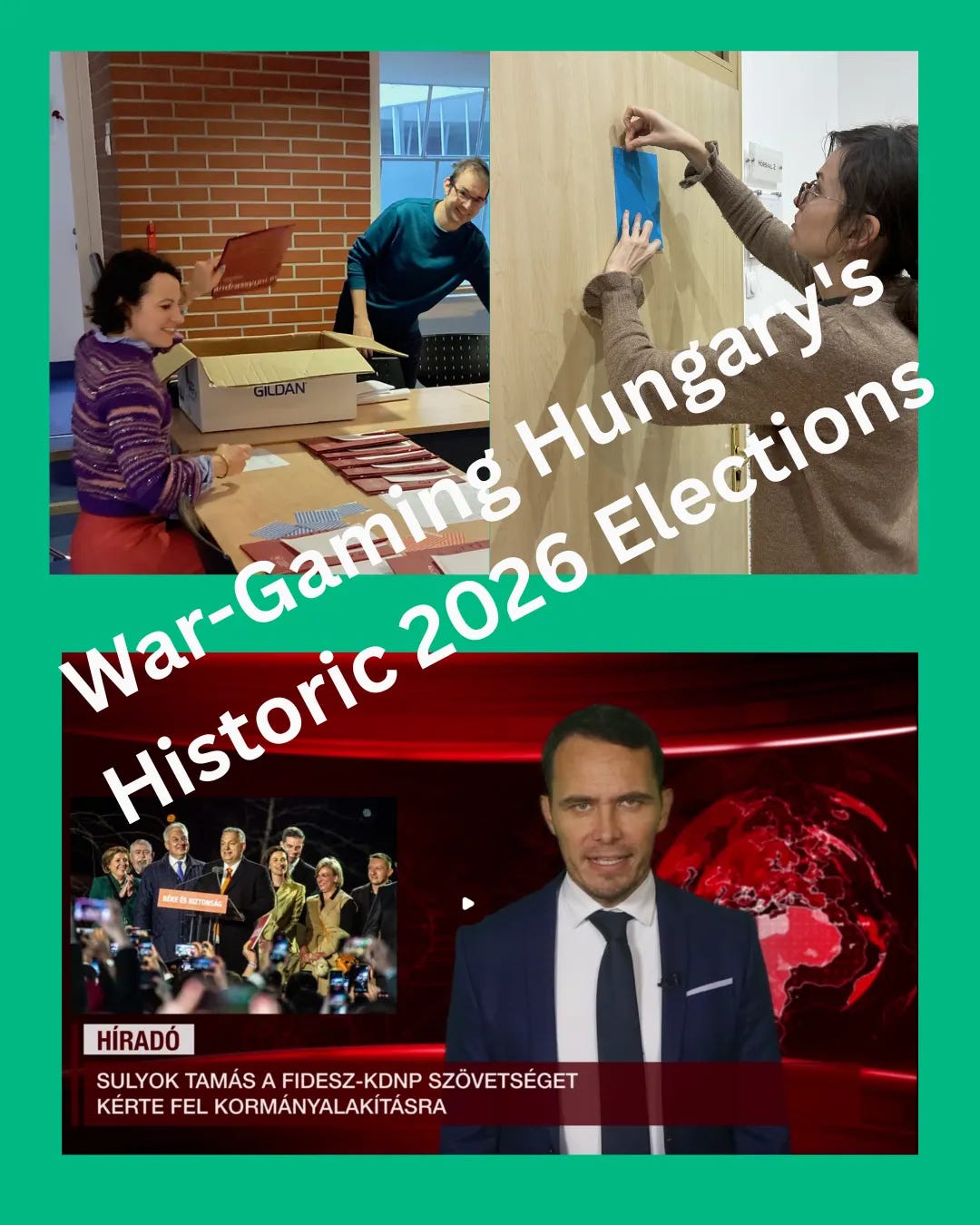
When we organised Hungary’s first election simulation exercise in early 2026, no one knew what would happen just a few weeks later. What we wanted to create was an opportunity to think collectively about the future and learn together.
Here are 5 key lessons from the experience from Zsofia Banuta, co-founder of REWIRE, Unhack Democracy and co-organiser of the game:
1. The game begins long before the simulation starts
The spirit of the simulation must first exist within the organising team. You cannot design an exercise about collaboration if the designers themselves work in isolation.
Throughout months of preparation, we built on each other’s expertise, networks, and ideas, constantly refining one another’s thinking.

2. Shared experiences teach far more than analysis
You can read an analysis, but a rich, immersive simulation has to be experienced. The difference is profound.
Participants did not simply discuss legal, political, or communication dilemmas in theory. They experienced firsthand what it feels like to make difficult decisions when you have only twenty minutes to respond to a rapidly unfolding crisis.
3. This methodology is not only useful in times of crisis
Most people associate simulations with emergencies. Yet I believe they are just as valuable when it comes to designing the future.
If we want to imagine the kind of country we would like to build, we must first dare to imagine the most optimistic scenarios.
How can we work towards a better Hungary if we constantly settle for the minimum and limit our own imagination?
The same methodology could play a valuable role during the constructive phase of a democratic transition, helping politicians, civil society organisations, entrepreneurs, researchers, and international partners work together to reimagine and rebuild the country’s institutions.
4. Collective thinking builds trust
Trust is built when people solve difficult problems together.
Throughout the nine-hour simulation, participants continuously responded to one another’s arguments, negotiated compromises, and made collective decisions.
By the end of the day, we had not only generated new ideas but also built new relationships and it’s fundamental when you are dealing with any transition or crisis.
5. We do our best thinking when we play
What surprised me most was how much we laughed, despite the seriousness of the subject.
Everyone fully embraced their role. When you create a safe environment where people feel free to experiment, make mistakes, and think creatively, they become more open and imaginative.
Participants encountered situations that none of us had anticipated beforehand. Some were so engaged that they did not want the simulation to end after the final round. To me, this demonstrated just how much people long for spaces where they can think together.
🇭🇺 As Hungary embarks on a new chapter following the 2026 elections, that lesson feels more relevant than ever. The next year or two will be critical as the country debates a new constitution and electoral framework. If these reforms are to endure, they must be shaped not behind closed doors, but through broad public participation, dialogue, and a shared commitment to rebuilding democratic institutions. The process itself will be just as important as the outcome.
The Hungarian Simulation Exercise 2026 was a non-partisan event that took place in February 2026 with members of civil society and the free press. The podcast was recorded in June 2026. If you’d like to learn more, please listen to the full episode.
Moderator:
Szubkontra / Balázs Zsuzsanna – journalist, founder of @Szubkontra, and co-author of the book Orbán Viktor’s Affairs with Women.
Guests:
Ádám Sanyó – Chief Designer and Moderator of the simulation; data analyst, election expert, and editor of Taktikaiszavazas.hu.
Melani Barlai – Co-organiser of the Simulation, Co-founder of Unhack Democracy, and political scientist at Andrássy University Budapest.
Zsófia Banuta – Co-organiser of the Simulation and Co-founder of Unhack Democracy.
A special thanks to Andor Kelenhegyi, game designer and Peter Gönci for his strategic contribution.
We are looking for partnership opportunities and are open to collaborate with anyone who’d like to prepare for the impossible in a crisis situation or transition.
🤔 Do you know anyone who would be interested?
✨ Stay tuned and until then happy listening.
See you soon,
Zsófi (REWIRE & Unhack Democracy)
This is REALLY cool, and such a great way to get prepared as a collective.